Viticulture
Terroir with a fingerprint
The number one key to wine quality — soil, climate, topography, and the human hand.
Viticulture
The number one key to wine quality — soil, climate, topography, and the human hand.
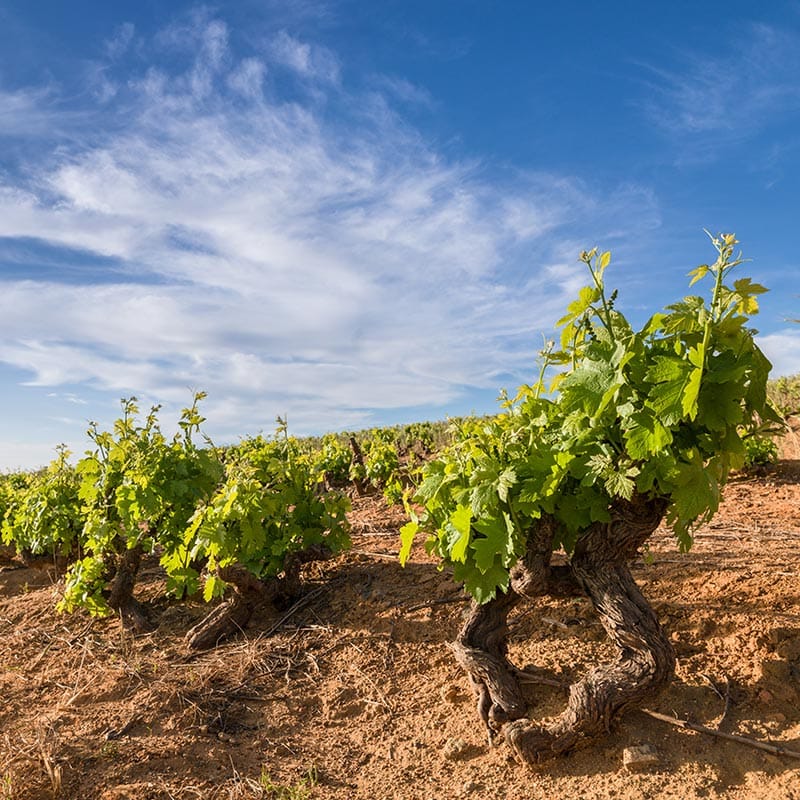
Terroir is usually defined as the influence of soil, climate and topography on a vine. At Kanonkop we add a fourth element the textbooks leave out: people. Generations of pruning, picking and coaxing have shaped these vineyards — not only with their hands, but their souls too. The result is a unique terroir that gives our wines a fingerprint and a consistent sense of place.

What we grow
Kanonkop is planted exclusively to red Bordeaux varieties and Pinotage — including some of the oldest Pinotage bush vines in South Africa, planted in 1953 and still delivering our Black Label.
Pruning happens in the cold of July and August with hand-powered electric secateurs: 6–8 canes per bush vine, 6–8 spurs per metre on trellised cordons. Every berry is hand-harvested.
Share of the 136 planted hectares.
The Four Pillars
Dryland bush-vine Pinotage at 3 300–3 600 vines/ha; trellised Cabernet blocks up to 4 000 vines/ha on the higher slopes.
Deep, weathered decomposed granite of the Simonsberg foothills — water-retentive enough to farm without irrigation.
Mediterranean: wet winters, warm dry summers tempered by False Bay breezes funnelling up the valley each afternoon.
North-facing slopes from 180 m to 365 m — sun-drenched ripening with altitude-cooled nights for freshness.
Next
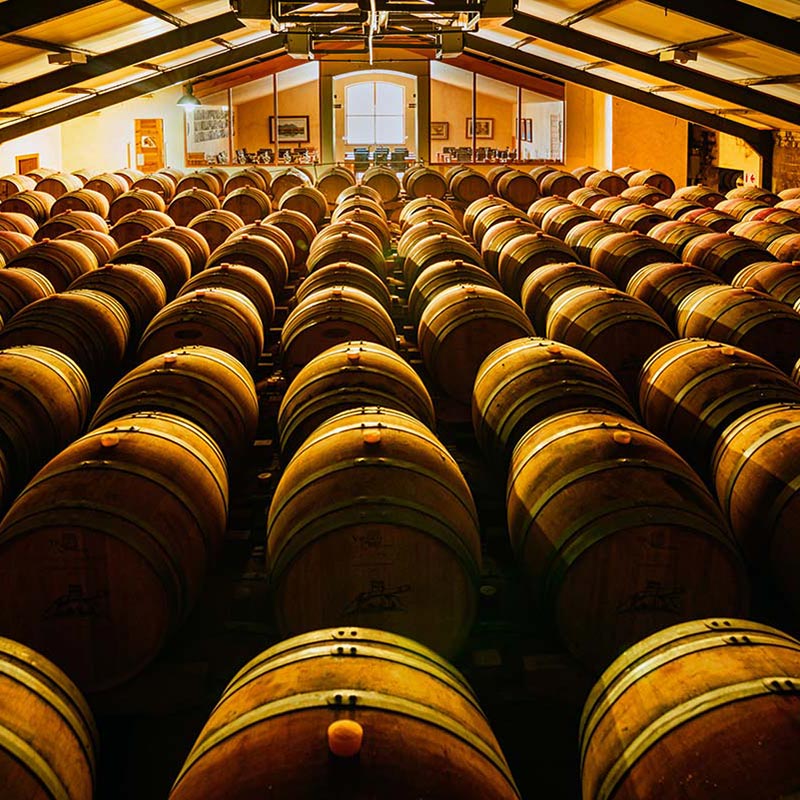
Hand-picked into 18 kg lug boxes, triple-sorted, and fermented in open concrete kuipe with punch-downs every two hours — see how the wines are made.
Explore the winemaking Sustainability & certification