Winemaking
Tradition, obsessively kept
“Wine is sunlight, held together by water.” — Galileo Galilei
Winemaking
“Wine is sunlight, held together by water.” — Galileo Galilei
No year in the vineyard is the same. Our task in the cellar is not to impose a style, but to capture each vintage's character — its climate, its season, its ecology — with methods that have barely changed in half a century, guided by technology that has.

The Journey
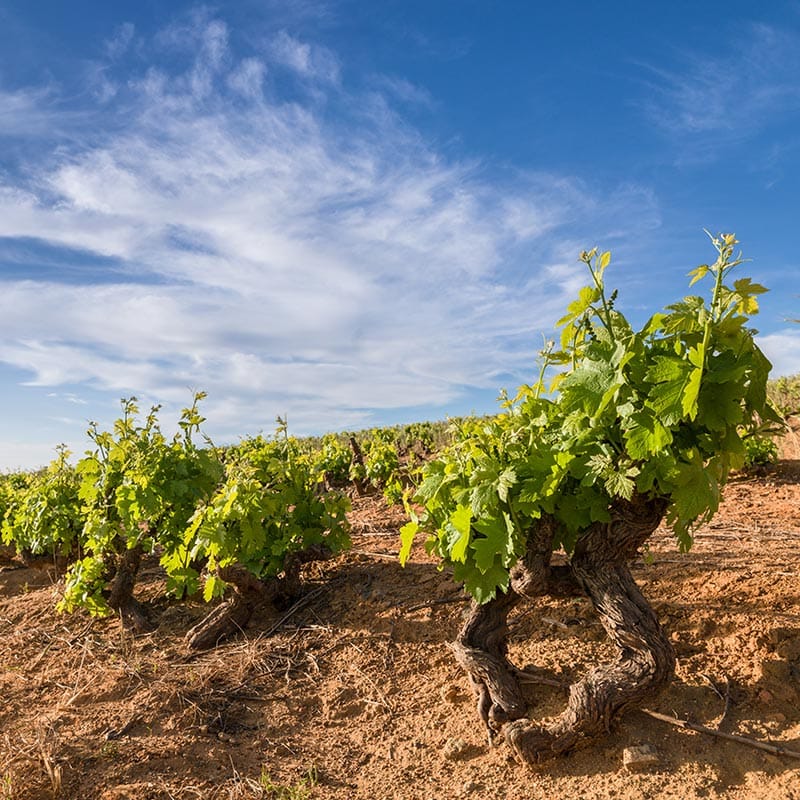
Pinotage ripens first, in February; Merlot, Cabernet Franc and Cabernet Sauvignon follow by mid-March. Every bunch is picked by hand into 18 kg lug boxes so no berry is crushed before its time.
Whole bunches are de-stalked, then berries pass a sorting machine, a vibrating table and finally a camera-guided optical sorter — only perfect fruit reaches the fermenters.
Crushed berries ferment in traditional open-top concrete kuipe of 10 tons — punched down by hand every two hours, day and night, with floor coolers holding the cap below 29 °C. Pinotage spends 3 days on the skins; the Cabernet varieties 5–6.
The two-hour interval is not tradition for its own sake. Beyers Truter arrived at it by trial in the 1980s, testing against the six- and eight-hour cycles then normal, and found it drew markedly better colour and tannin. It has been kept ever since — and the concrete tanks themselves date to the cellar built here in 1942.
Two to three months of secondary fermentation soften the young wines before they go to wood.
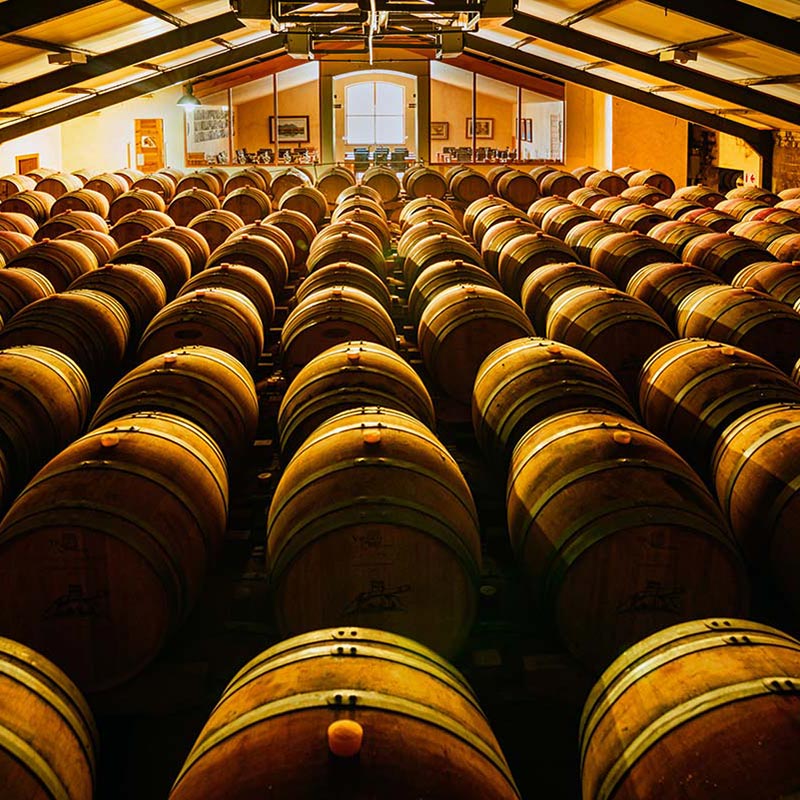
Maturation in 225-litre French oak barriques — 12 months in seasoned oak for Kadette wines, 18–24 months in new oak for the Estate Range. More than 5 000 barrels rest on-site at any time.
Paul Sauer is blended before it goes to wood, not after — the Cabernet Sauvignon, Merlot and Cabernet Franc are married while still raw and then matured as one wine. It is the harder way round, and asks the winemaker to judge a wine that will not exist for another two years.
Every bottle is filled, labelled and packed on the farm — provenance guaranteed from vine to case.
Sustainability
Heritage means nothing if it isn't handed on. Kanonkop pairs old-world method with responsible modern farming.