Sustainability
Farming for the next hundred years
Heritage means nothing if it isn't handed on. What we are certified for, what we have changed, and what we are still working on.
Sustainability
Heritage means nothing if it isn't handed on. What we are certified for, what we have changed, and what we are still working on.
Kanonkop pairs old-world method with responsible modern farming. Three of the four below are independently audited by bodies outside the estate — you can check the certification on the bottle in your hand without taking our word for it.

One — Certification
All Kanonkop wine is certified by Sustainable Wine South Africa, and the certification seal appears on each bottle.
SWSA is the alliance between the Wine and Spirit Board, the IPW scheme for integrated production of wine, the WWF-SA Conservation Champion programme and Wines of South Africa. Together they drive the industry's commitment to sustainable, eco-friendly production — around 94% of South African producers now certify under it.
The seal carries a unique number. Anyone holding one of our bottles can enter that number online and verify for themselves that the wine was produced to the standard claimed.
Two — Ethical trade
Kanonkop supports ethical trade and is accredited by WIETA, the Wine and Agricultural Ethical Trade Association.
WIETA is a multi-stakeholder non-profit organisation that promotes ethical trade in the wine industry through training, technical assessment and audits, measuring members against its code of good practice. Accreditation is not a statement we make about ourselves — it is the outcome of somebody else coming to look.
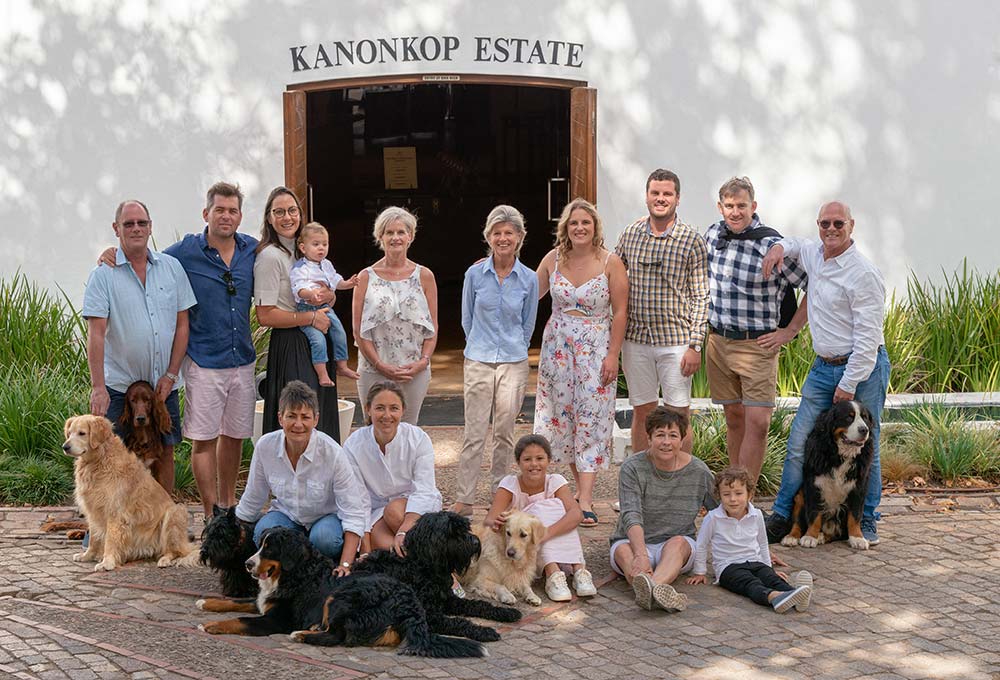
Sixty people work this farm. Several families are in their third and fourth generation here.
Three — Power
In 2017 Kanonkop began a solar generation project, completed in September 2018. Its 156 kWp plant now accounts for close to half the estate's daily power.
It began as an answer to rising electricity costs and load-shedding, and turned into the single largest reduction we have made in what the estate takes from the grid. A cellar that runs on coolers, pumps and a bottling line uses real power; producing half of it on site changes the footprint of every bottle that leaves here.
Four — What goes in
For the past ten years we have actively removed animal-based additives from the fining processes in the cellar.
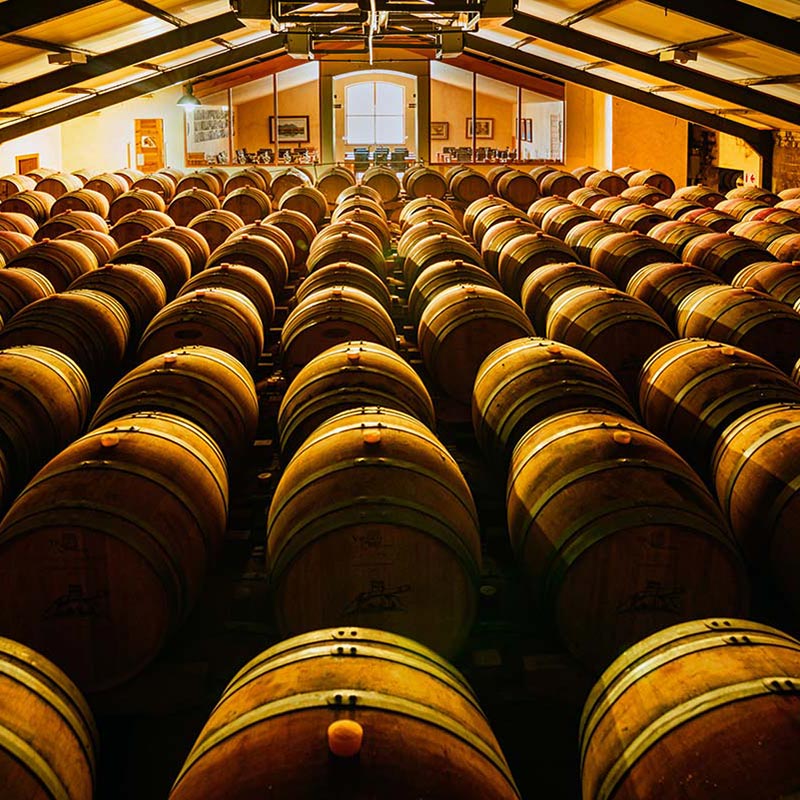
Gelatine and albumin — egg white — are gone. Plant-based alternatives such as potato protein now do the clarification and settling. The quality of the grapes coming out of the vineyard, and the winemaking regime that follows, are what made that possible without compromising the wine.
We have also done extensive research into tannin additions, specifically to reduce how much sulphur is needed as a protective agent. The aim throughout is the same: the best wine we can make, with as little added to it as possible.
Packaging
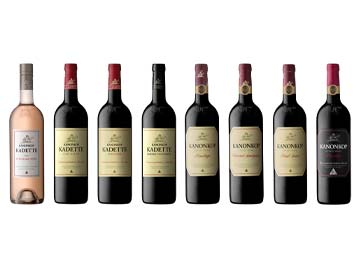
The Kadette range has moved to a lighter bottle. Glass is the heaviest thing in a case of wine and the part that travels furthest, so its weight is where packaging decisions actually count.
Where this happens
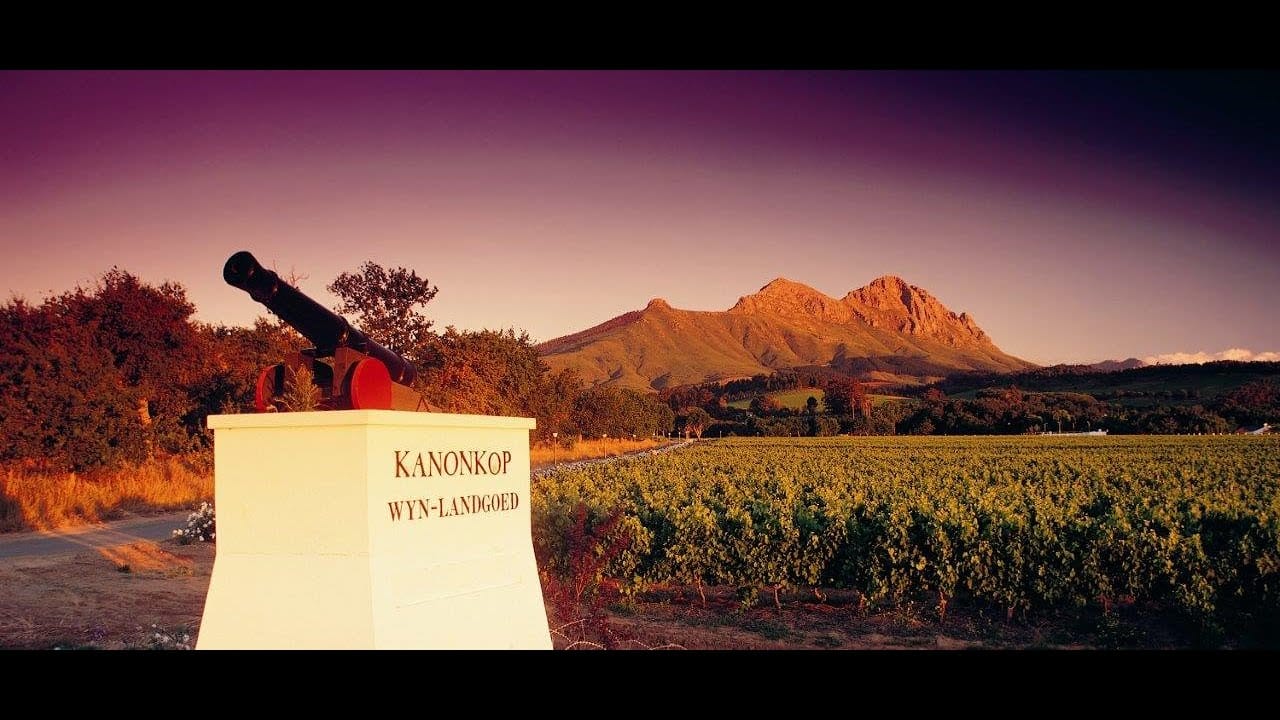
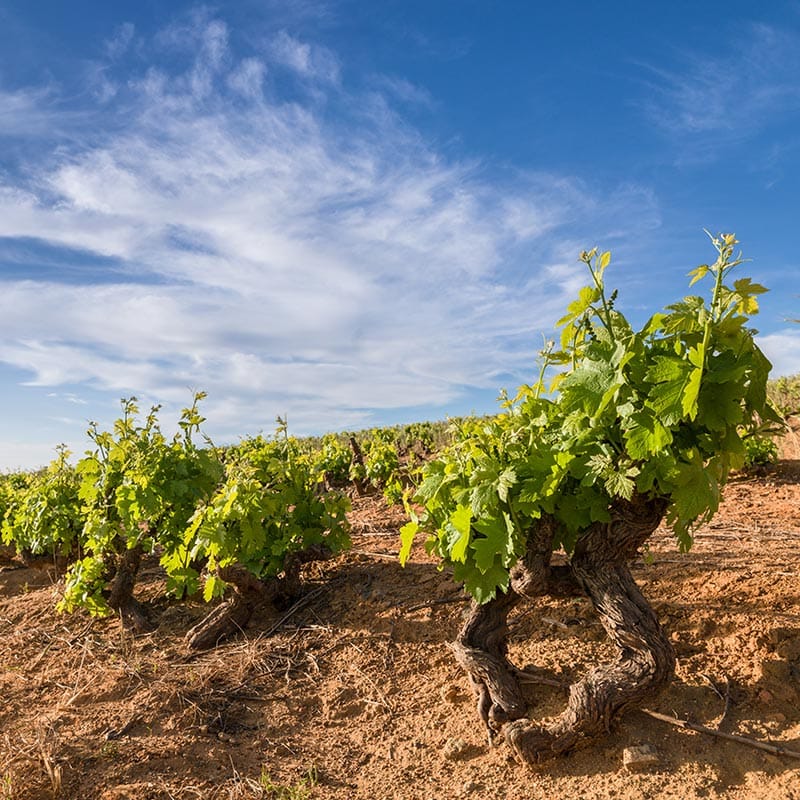
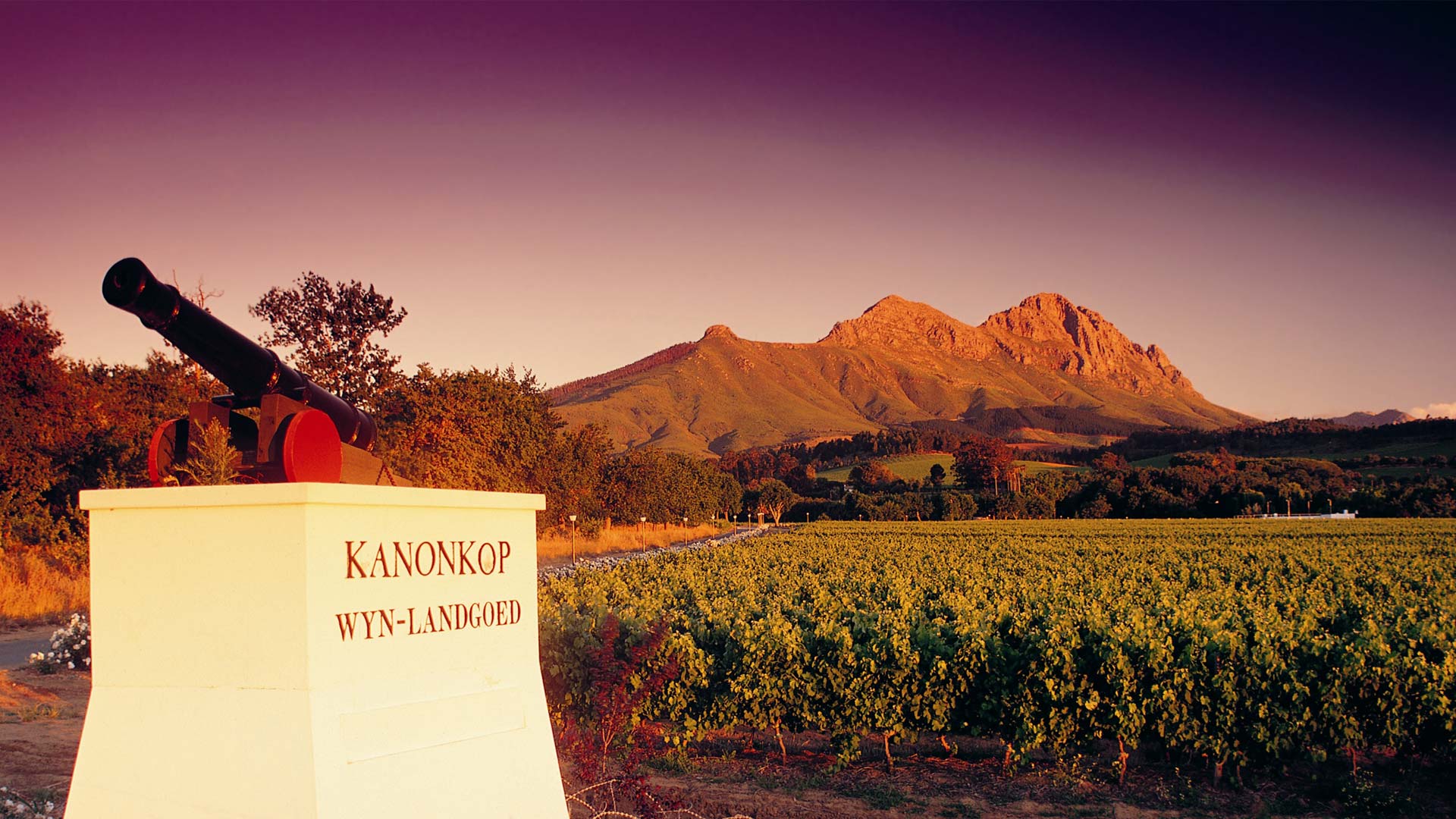
136 hectares of dryland vineyard farmed without irrigation, and a cellar where every berry is sorted three times before it ferments. Sustainability here is mostly a series of ordinary decisions made the same way for fifty years.
How the wine is made Vineyards & terroir